In This Guide
- TL;DR
- Why Do So Many People Not Feel Kava at First?
- What Is Reverse Tolerance?
- What Makes Kava Different?
- Why Might Someone Not Feel Kava the First Few Times?
- What Does Human Research Actually Show?
- What Does the Animal Research Say?
- So, Does Kava Have Reverse Tolerance?
- What Should You Do If You Felt Nothing?
- Frequently Asked Questions
- Sources
We are the Kava Moon family, and we have been passionate about kava for years. We have personally experienced what many people call reverse tolerance, and that experience is what drove us to dig into the research and put together what we believe is the most comprehensive scientific deep dive on kava reverse tolerance on the internet.
This is not a surface-level summary. We read the studies, checked the citations, and built this article to give you an honest, thorough answer grounded in real evidence.
TL;DR
A lot of people say the same thing about kava: they try it once or a few times, barely feel anything, then later start feeling it much more clearly.
That experience is often called reverse tolerance.
Is kava reverse tolerance fully proven in humans? No. Is it scientifically ridiculous? Also no.
After looking into the research, the most honest answer is this: kava reverse tolerance is plausible, but not proven. Kava affects the brain in unusual ways, different kava products can vary a lot, food can reduce absorption, and older animal work suggests kava does not follow one simple tolerance pattern across all preparations.
What we can say is this: regardless of the mechanism, a huge number of kava users report the same thing. The effects get clearer and more noticeable with repeated use. Whether that is true sensitization, learning to recognize subtle effects, or something else entirely, the pattern is real and consistent enough that it deserves attention.
Why do so many people not feel kava at first, then grow to feel it more later?
This is the question that made us take the topic seriously.
When we first heard about reverse tolerance with kava, we thought it sounded impossible. With most substances, you expect the opposite. You expect that repeated use leads to needing more, not less. So when we heard people say kava can feel stronger over time, we did not buy it.
But after taking kava consistently, we started noticing the effects more and more. And the more we paid attention, the more we realized how many other people described the same general pattern. That is what pushed us to stop brushing it off and actually dig into the science.
What is reverse tolerance?
In plain English, reverse tolerance means this: you take the same amount of something, but instead of feeling it less over time, you feel it more.
In science, a related idea is often called sensitization. That concept is real. It has been observed with other substances under certain conditions. In amphetamine research, for example, repeated intermittent exposure can sometimes lead to a stronger later response. That is important because it shows the basic concept is biologically possible. It does not prove kava does the same thing. It just means the idea itself is not absurd.
That nuance matters. Even with amphetamines, sensitization is not a universal rule. The dosing schedule matters. Some exposure patterns can produce sensitization, while others can produce ordinary tolerance instead. So when we mention amphetamine studies, we are not saying they prove kava reverse tolerance. We are saying they show increased responsiveness over time can happen in biology under some conditions.
What makes kava different?
Kava is not one simple, standardized substance.
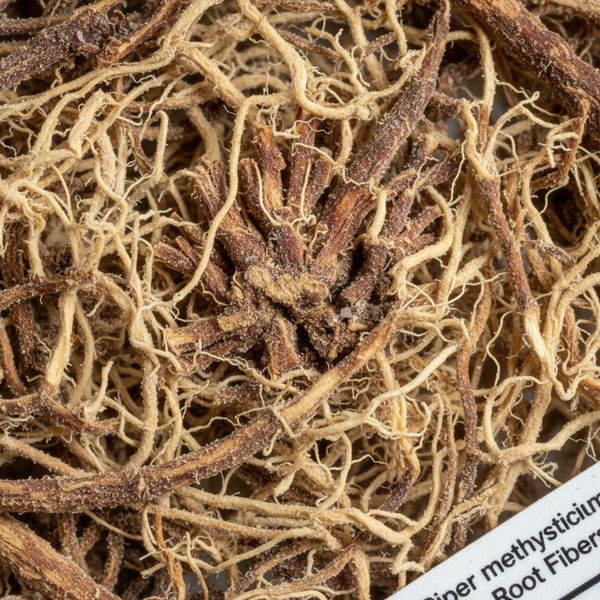
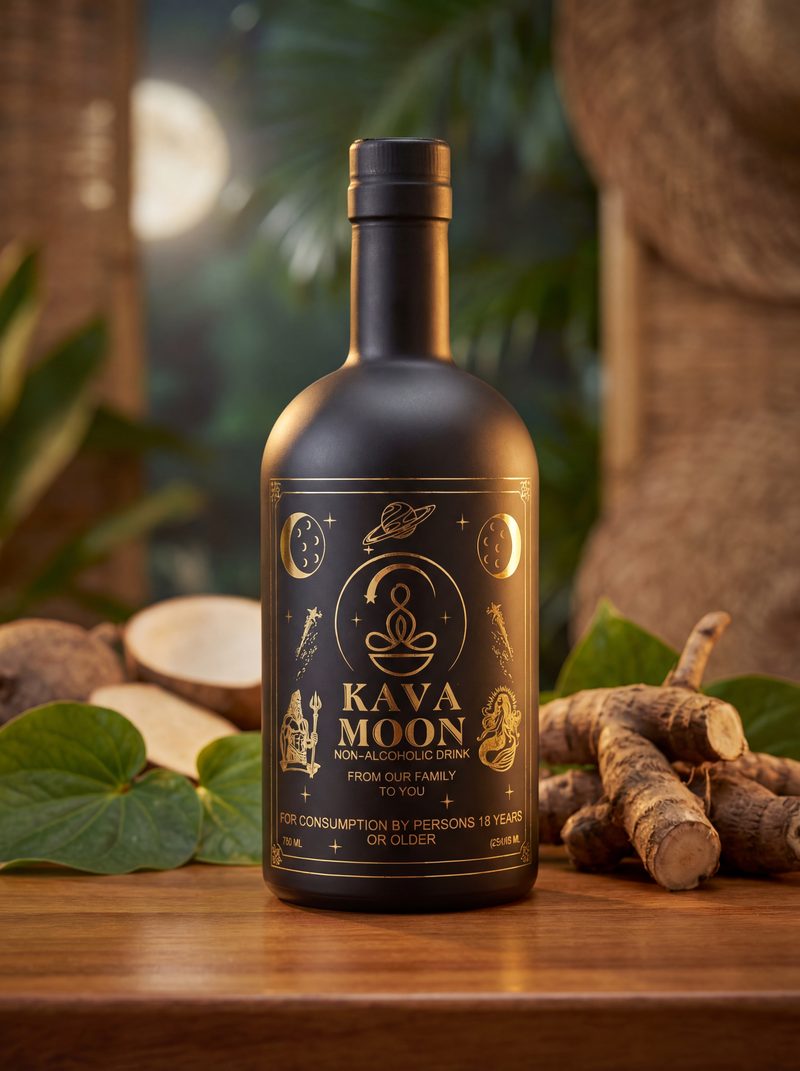
Kava comes from Piper methysticum and contains active compounds called kavalactones. Research suggests kava interacts with several systems in the brain, especially ones related to calmness and anxiety. One study found that kavain, one of the main kavalactones, can positively modulate GABAA receptors, and apparently not through the classical benzodiazepine binding site. In simple terms, kava seems to affect calming brain pathways, but not in exactly the same way as alcohol or benzodiazepines. That makes it more believable that its response pattern could also be different.
Another important point is that "kava" is not just one thing. Traditional water-based kava, standardized extracts, capsules, tinctures, different cultivars, and different chemotypes can all vary meaningfully. Reviews of the literature repeatedly point to product variability as one major reason kava research can be hard to interpret. Two people can both say they "tried kava" and still be talking about very different chemical experiences.
Why might someone not feel kava the first few times?
Even if reverse tolerance is part of the story, it is probably not the whole story.
One major factor is absorption. A 2022 human pharmacokinetic study found that food significantly reduced the absorption of kavalactones. So if someone drinks kava on a full stomach and feels very little, that alone could make a big difference.
Another factor is product variability. Studies of commercial kava products have found substantial differences in composition. That means weak or inconsistent products can easily confuse the picture and make people think kava "does nothing" when the real issue may be what they took, how it was made, or how much active material it actually contained.
A third factor is that kava can be subtle at first. Not everyone gets hit with one dramatic feeling the first time. For some people, the early effects may be quieter body tension, less mental noise, a heavier face, or a slightly more relaxed social mood. It is possible that part of what people call reverse tolerance is simply learning to recognize what kava feels like in their own body.
And finally, individual biology matters. Human studies show meaningful variability in how kavalactone levels appear in the body after dosing, even when obvious factors do not fully explain those differences. Two people can take the same product and have noticeably different experiences.
What does human research on kava actually show?
This is where the conversation needs to stay honest.
Human kava research is mixed. Some clinical trials found that kava improved anxiety more than placebo. A 1997 randomized trial reported significant improvement over placebo, and a 2013 study in generalized anxiety disorder also found a significant reduction in anxiety in the kava group.
But a later 16-week phase III study did not find a significant overall benefit over placebo for the extract it tested.
So the human literature does not support a simplistic claim like "kava obviously works more and more over time." What it supports is a more nuanced picture: kava may have meaningful effects in some contexts, but the results depend on the product, the study design, the population, and probably the individual. As far as we could find, there is no clean human trial specifically designed to prove or disprove reverse tolerance itself in the way people usually mean it.
Key Takeaway
Human research supports the idea that kava can have real effects, but the results are mixed and depend heavily on the product and context. No study has directly tested the "reverse tolerance" question in a controlled setting.
What does the animal research say?
There is one older mouse study that gets brought up a lot in reverse tolerance discussions, but it is often summarized too loosely.
That study did not show a clear reverse tolerance effect. What it found was that mice developed rapid tolerance to one aqueous extract, while tolerance to kava resin was harder to induce and only partial under certain conditions. That is interesting because it suggests kava may not follow one simple tolerance pattern across all preparations. But it is not proof of reverse tolerance.
In our assessment, that study does not settle the issue. What it does do is support a more careful conclusion: kava's tolerance profile may be more complicated than people assume.
So, does kava have reverse tolerance?
Our answer is: maybe, plausibly, but not conclusively.
We do not think it is scientifically honest to say that reverse tolerance in kava is settled fact.
We also do not think it is scientifically honest to dismiss the idea as nonsense.
Too many people describe a similar pattern, and once you look at the science, there are enough unusual features of kava to understand why the question stays open. Kava affects calming pathways differently from some better-known substances, food can weaken absorption, products vary a lot, and the animal literature suggests kava does not behave in one simple, uniform way.
Kava reverse tolerance is widely reported, scientifically plausible, and not directly proven in human trials.
That may sound less dramatic than a hard yes or no, but it is the strongest answer we can give after reviewing the evidence.
What should you do if you tried kava and felt nothing?
Do not jump straight to "kava does not work."
And do not automatically assume it must be reverse tolerance either.
Start with the simple variables. Ask what type of kava it was. Ask whether you took it on a full stomach. Ask whether the product was from a source you trust. Ask whether the effects may have been subtle rather than dramatic.
That approach is more grounded than chasing huge doses or making a final judgment after one try. And from a science perspective, it makes more sense too, because absorption, product quality, and individual response all clearly matter.
Final thoughts
When we first started exploring kava reverse tolerance, we thought it sounded impossible.
Now we do not.
We still do not think it has been proven in humans. But we do think it is one of the most interesting questions in the kava world, and we think the people who report this experience deserve to be taken seriously, not brushed off.
At minimum, kava does not fit neatly into the simple model people expect where repeated use always means weaker effects. The real story is more complicated than that, and that is exactly why the conversation matters.
Tell us your experience
Have you felt what seemed like reverse tolerance with kava?
Did you barely feel it at first, then start noticing it more clearly later? Or did that never happen for you?
We would love to hear from you either way. Email us and tell us your experience. And if you know of any study that strengthens this argument, weakens it, or adds useful nuance, send that too. We are always open to better evidence.
Frequently Asked Questions
Kava reverse tolerance is the idea that some people feel kava more clearly after repeated use instead of less. In scientific language, the closest related concept is usually called sensitization. That concept is real in pharmacology, but kava itself has not been conclusively shown in human trials to produce a true reverse-tolerance effect.
There are several possible reasons. Food can significantly reduce kavalactone absorption, kava products vary a lot in composition, individual biology differs, and some early effects may be subtle enough that people do not recognize them right away. Those explanations are better supported than a blanket claim that every new user has proven reverse tolerance.
No. We could not find a clean human trial specifically designed to prove or disprove reverse tolerance in the way kava users usually mean it. Human research on kava mostly focuses on anxiety outcomes, safety, and pharmacokinetics rather than repeated fixed-dose testing of subjective intensity over time.
Research suggests that kava, especially the kavalactone kavain, can modulate GABAA receptors, and one key study found that this effect did not occur through the classical benzodiazepine binding site. That does not prove reverse tolerance, but it does support the idea that kava may not behave exactly like alcohol or benzodiazepines.
Yes. A 2022 human pharmacokinetic study found that food significantly reduced the extent of kavalactone absorption. That means drinking kava on a full stomach can make the effects less noticeable.
No. Traditional water-based kava, commercial extracts, capsules, tinctures, and different cultivars can differ meaningfully in chemical composition. Studies and reviews have found substantial variability across kava products, which is one reason people can have very different experiences.
An older mouse study found rapid tolerance to one aqueous kava extract, while tolerance to kava resin was more difficult to induce and only partial under some conditions. That is interesting because it suggests kava may not follow one simple tolerance pattern across all preparations, but it does not prove reverse tolerance.
The results are mixed. Some trials found that kava improved anxiety more than placebo, including a 1997 randomized trial and a 2013 generalized anxiety disorder study. But a later 16-week phase III trial did not find a significant overall benefit over placebo for the extract it tested.
Do not jump straight to the conclusion that kava does nothing, and do not automatically assume it is reverse tolerance either. First look at the basics: what type of kava you used, whether you took it with food, whether the product was high quality, and whether the effects may have been subtle rather than dramatic. Those variables clearly matter.
Sources
- Chua HC, et al. Kavain, the Major Constituent of the Anxiolytic Kava Extract, Potentiates GABAA Receptors: Functional Characteristics and Molecular Mechanism (2016). PMC
- Kanumuri SRR, et al. Clinical pharmacokinetics of kavalactones after oral dosing of standardized kava extract in healthy volunteers (2022). PMC
- Duffield PH, et al. Development of tolerance to kava in mice (1991). PubMed
- Volz HP, Kieser M. Kava-kava extract WS 1490 versus placebo in anxiety disorders: a randomized placebo-controlled 25-week outpatient trial (1997). PubMed
- Sarris J, et al. Kava in the treatment of generalized anxiety disorder: a double-blind, randomized, placebo-controlled study (2013). PubMed
- Sarris J, et al. Kava for generalised anxiety disorder: a 16-week double-blind, randomized, placebo-controlled phase III study (2020). PubMed
- Pittler MH, Ernst E. Kava extract versus placebo for treating anxiety (review). PMC
- Bian T, et al. Kava as a Clinical Nutrient: Promises and Challenges (2020 review). PMC
- Martin AC, et al. Measuring the chemical and cytotoxic variability of commercially available kava products (2014). PubMed
- Côté CS, et al. Composition and biological activity of traditional and commercial kava extracts (2004). PubMed